After the Nameplate Dies: Keeping a Vehicle Alive When the Manufacturer No Longer Exists
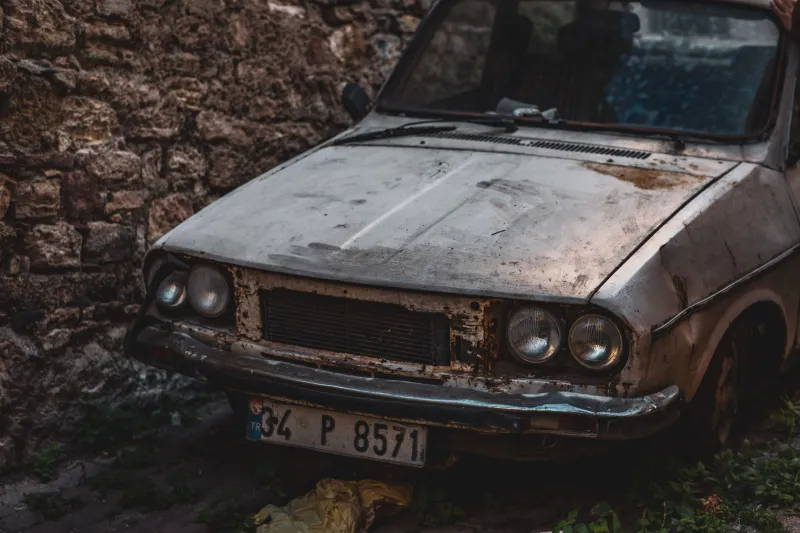
There is a particular irony that attaches itself to the rarest vehicles in any serious collection. The more singular the machine, the more likely it is that the organization responsible for building it has ceased to exist in any meaningful form. Automakers fold. Coach builders retire. Small-batch constructors dissolve into silence. And the vehicles they produced—some of them genuinely irreplaceable—remain in garages and on roads across the United States, requiring maintenance, registration, insurance, and occasional repair from an industry that was never built to support them.
This is what collectors and enthusiasts sometimes call the orphan problem. It is not a sentimental concern. It is a practical one, and it grows more acute with every year that passes after a manufacturer's closure.
Understanding the Scope of the Problem
The orphan vehicle category is broader than most buyers initially appreciate. It encompasses automobiles from defunct American marques—think DeLorean, Packard, Tucker, or Studebaker—but it extends well beyond domestic failures. Vehicles from manufacturers that operated exclusively in foreign markets and never established US distribution networks present their own distinct set of complications. So do bespoke builds: cars commissioned from coachwork specialists, racing constructors, or private fabricators who may have completed only a handful of vehicles before closing their doors.
For each of these sub-categories, the central problem is the same. When something goes wrong—or even when something requires routine attention—there is no authorized service network to call, no parts distribution system to query, and no factory technical department to consult. The owner is, in a very real sense, operating without a net.
What separates the successful orphan vehicle owner from the frustrated one is preparation, and preparation begins before the purchase is completed.
Building Your Technical Brain Trust
The first and most consequential step any prospective buyer of an orphan vehicle should take is identifying qualified technical expertise before money changes hands. This sounds obvious. It is, in practice, frequently ignored.
For vehicles from defunct American manufacturers, marque-specific clubs remain the most reliable starting point. Organizations dedicated to preserving the legacy of discontinued brands often maintain registries of qualified mechanics, known parts suppliers, and technical documentation that has survived corporate dissolution. The quality and depth of these resources varies considerably, but they represent institutional knowledge that cannot be easily replicated through general automotive research.
For vehicles from manufacturers that never formally exported to the United States, the path is narrower but not impassable. Online communities organized around specific makes and models—particularly those operating across international borders—can connect American owners with technicians in the vehicle's country of origin who are willing to consult remotely or, in some cases, travel for significant restoration projects. Translation services have become sufficiently sophisticated that foreign-language technical documentation is no longer the barrier it once was.
For truly bespoke builds, the research process becomes investigative in nature. Tracking down former employees of a dissolved coach builder, locating the original fabricator who may have moved on to other work, or identifying the specific suppliers from whom components were sourced can require sustained effort. That effort is worth making. The alternative is attempting to maintain a vehicle whose engineering decisions you cannot fully understand.
The Parts Equation: Sourcing What No Catalog Lists
Parts availability is the most frequently cited concern among orphan vehicle owners, and for good reason. When a manufacturer closes, its parts inventory is typically liquidated, warehoused by third parties, or simply allowed to disappear. What remains in circulation is finite, and that supply diminishes with every passing year.
The practical response to this reality operates on several levels simultaneously. The first is acquisition: when a known parts supply becomes available, experienced orphan vehicle owners purchase quantities that extend well beyond their immediate needs. Holding inventory is not hoarding—it is responsible stewardship of a resource that cannot be replenished.
The second level is substitution. Many components used in low-volume or specialty vehicles were sourced from larger suppliers who produced identical or near-identical parts for mainstream manufacturers. Identifying these upstream relationships—a particular carburetor, a specific brake caliper, a proprietary seal—can reveal that what appears to be an unobtainable orphan component is, in fact, available through conventional channels under a different part number.
The third level is fabrication. For structural and mechanical components that cannot be sourced through any other means, skilled machinists and fabricators can produce replacements from surviving examples or engineering drawings. This option is expensive, and it introduces questions about authenticity that must be carefully managed from a collector standpoint—but it is frequently the only viable path for keeping a vehicle in operational condition.
Legal and Regulatory Legitimacy
Ownership of an orphan vehicle in the United States carries legal dimensions that deserve careful attention. Title documentation, registration, and emissions compliance each present potential complications that vary by state and by the specific history of the vehicle.
Vehicles imported from markets where they were never officially sold in the US may carry title histories that require clarification before they can be cleanly registered in certain states. The federal 25-year exemption rule—which allows vehicles that are at least 25 years old to be imported without meeting current Federal Motor Vehicle Safety Standards—resolves many of these issues for older orphan vehicles, but the paperwork trail must be complete and verifiable.
Insurance presents a parallel challenge. Standard automotive policies are frequently inadequate for vehicles whose replacement value cannot be determined by reference to market comparables. Agreed-value policies from insurers who specialize in collector and specialty vehicles are the appropriate instrument here, and obtaining one typically requires a formal appraisal from a qualified professional—ideally one with documented expertise in the specific marque or vehicle type in question.
Preserving Institutional Knowledge Alongside the Vehicle
Perhaps the most overlooked responsibility of an orphan vehicle owner is the preservation and transmission of knowledge. Every technician who has worked on the vehicle, every parts source that has been identified, every engineering decision that has been decoded through research or reverse engineering represents information that exists nowhere else. When that information is not documented, it is effectively lost when it is no longer needed.
Serious stewards of orphan vehicles maintain detailed service records that go beyond the conventional log of dates and mileage. They document the reasoning behind technical decisions, the sources from which parts were obtained, and the contact information for every specialist who has contributed expertise. This record becomes part of the vehicle's provenance and enhances its value for any future owner who inherits the same challenges.
Owning a vehicle that has outlived its maker is, in this sense, an act of institutional preservation as much as it is an act of personal enthusiasm. The machine itself is the artifact. The knowledge required to sustain it is the context that keeps the artifact meaningful.
At Only One Auto, we recognize that the vehicles presenting the greatest ownership challenges are often the same ones that carry the greatest historical and collector significance. The orphan problem is real. But for the owner who approaches it with appropriate diligence, it is also entirely manageable—and navigating it successfully is part of what makes these vehicles worth owning in the first place.