Dust and Dividends: How to Spot the Next Great Collector Car Before the Market Does
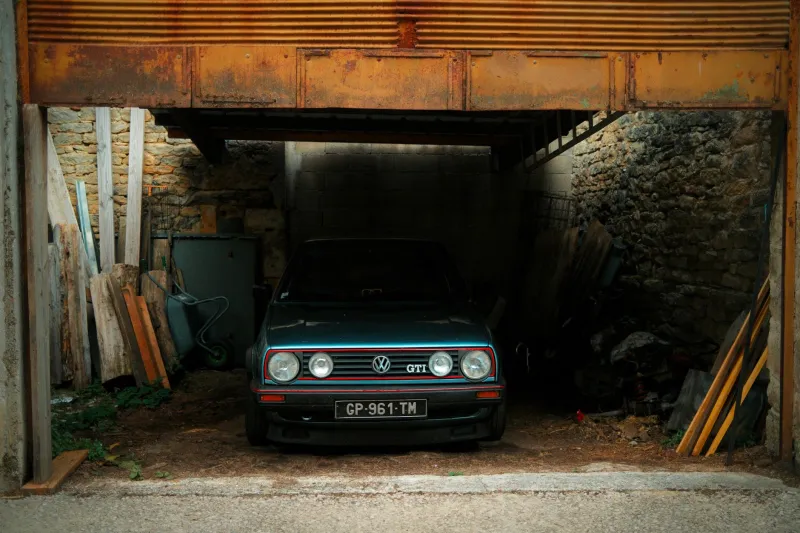
There is a particular kind of collector who does not attend the marquee auctions, does not subscribe to the glossy publications, and does not follow the consensus. Instead, they drive county roads, answer estate sale listings at seven in the morning, and spend weekday afternoons cross-referencing factory production data against current registration figures. These are the individuals who found low-mileage Fox-body Mustang GTs for three thousand dollars in 2009, who acquired clean first-generation Acura NSXs before Silicon Valley discovered them, and who quietly assembled collections of air-cooled Volkswagen variants that now command prices that would have seemed delusional a decade ago.
Their method is not luck. It is discipline, research, and a willingness to act on conclusions that the broader market has not yet reached.
The Anatomy of a Sleeper
Before a collector can identify an undervalued vehicle, they must first understand what creates undervaluation in the first place. The collector car market, for all its passion and romanticism, is fundamentally driven by the same forces that govern any asset class: perception, scarcity, and generational demand.
Perception is the most manipulable of these variables. A vehicle that was considered ordinary during its production run carries a stigma that can persist for decades after manufacture ceases. The original buyers of a 1987 Buick Grand National were not the same demographic that now pursues them with considerable financial conviction. The car was underestimated at the time of its sale, then underestimated again in its first years of obsolescence, and then — almost without warning — it became one of the more celebrated American performance vehicles of the twentieth century.
Scarcity is frequently misunderstood. Raw production numbers matter, but survival rates matter more. A vehicle built in modest numbers but sold primarily to owners who drove them hard and discarded them early may be rarer in usable condition than a vehicle produced in far greater quantities but purchased by buyers who preserved them carefully. The collector who studies factory build sheets and cross-references them with current auction appearance frequency is operating with meaningfully better information than one who simply reads that a given model had a low production run.
Generational demand is perhaps the most predictable variable available to the patient analyst. The vehicles that command serious collector attention today are, with remarkable consistency, the vehicles that the current generation of forty-five to sixty-five-year-old buyers coveted in their adolescence but could not afford. Working backward from that observation, the vehicles that will define collector interest in 2035 and beyond are those that captured the imagination of buyers who are currently in their late twenties and thirties.
Reading the Signals Before They Become Obvious
The challenge for any collector attempting to identify the next wave of desirable vehicles is that the most reliable signals appear subtle — almost dismissible — until they are not. Several indicators have proven consistently useful across different market cycles.
Forum activity preceding price movement. The specialized online communities dedicated to specific vehicles or eras tend to register genuine enthusiasm before that enthusiasm translates into auction results. When previously quiet forums begin generating sustained technical discussion, parts sourcing threads, and restoration documentation, it is a meaningful early indicator. The early Mitsubishi Eclipse GSX communities were having serious technical conversations years before those cars began appreciating with any consistency.
Insurance and registration data. States that require periodic registration renewals provide indirect evidence of how many examples of a given model remain in active use. A dramatic decline in registered examples, combined with emerging collector interest, creates precisely the supply constraint that drives appreciation.
The fifty-year exemption effect. Federal emissions and safety regulations provide a practical tailwind for vehicles that cross the twenty-five-year import threshold or that qualify for vintage exemptions in various states. Vehicles approaching these milestones from markets outside the United States — Japanese domestic market cars, European-specification models — have historically seen meaningful price movement in the years immediately preceding and following eligibility.
Current Categories Worth Serious Attention
Several vehicle categories are currently exhibiting the early-stage characteristics that preceded significant appreciation in previous market cycles.
Late-1990s and early-2000s Japanese performance sedans — specifically those equipped with factory sport packages and manual transmissions — remain genuinely accessible in many regional markets. The Subaru Legacy GT of that era, the Mitsubishi Galant VR-4, and certain Mazda 626 variants with manual gearboxes are all vehicles that the current generation of collectors grew up respecting but largely ignored as collectibles. Clean examples with verifiable service history are still findable at prices that will appear extraordinary in retrospect.
American muscle from the malaise era — specifically 1975 through 1981 — has been dismissed for so long that the dismissal itself has become reflexive rather than analytical. The production numbers for genuinely optioned cars from this period are often surprisingly low. A 1979 Pontiac Firebird Trans Am with the W72 400 cubic inch engine and a documented build sheet is a more unusual object than the market currently acknowledges.
First-generation sport utility vehicles with original drivetrains and low mileage are another category that rewards patient attention. The earliest examples of models that launched entire segments — the original Ford Bronco notwithstanding, which has already been thoroughly discovered — still exist in varying states of preservation across the mountain states and the rural South.
The Framework for Evaluation
Any serious assessment of a potential sleeper acquisition should address five questions before a purchase decision is made.
First: does the vehicle represent a meaningful mechanical or historical departure from what was otherwise available at its price point during its production run? Significance, even when unrecognized at the time of manufacture, is a prerequisite for lasting collector interest.
Second: what is the realistic survival rate for examples in genuinely usable condition? Sentimental interest in a vehicle that no longer exists in sufficient numbers to support a collector community produces frustration rather than appreciation.
Third: is there a credible path to parts availability, whether through existing aftermarket support, new-old-stock inventory, or the emergence of reproduction components? The most interesting vehicle in the world becomes a liability if it cannot be maintained.
Fourth: who is the likely future buyer, and what will motivate them? The answer to this question should be grounded in demographic analysis, not wishful thinking.
Fifth: what does the vehicle cost to own in the interim? Carrying costs — storage, insurance, incremental maintenance — erode the eventual return on any asset that appreciates slowly. The calculus must account for the full duration of ownership, not simply the spread between acquisition price and projected sale price.
Patience as a Competitive Advantage
The collector car market rewards patience in a manner that few other asset categories can match, largely because the majority of participants are emotionally rather than analytically motivated. The individual who acquires a genuinely significant vehicle before the market recognizes its significance is not simply lucky — they are operating with a longer time horizon and a more rigorous analytical framework than the buyers who will eventually compete for the same car at auction.
The barn finds and estate lot discoveries that generate breathless coverage in the automotive press are not accidents. They are the visible outcomes of years of quiet, methodical attention paid by collectors who understood what they were looking at before anyone else thought to look.
The next generation of those discoveries is out there right now, sitting under tarps and accumulating dust in places where the general market has not yet thought to search. The question is not whether they exist. The question is whether you are doing the work required to find them first.