One In, Five Out: The Brutal Arithmetic of the Serious Collector
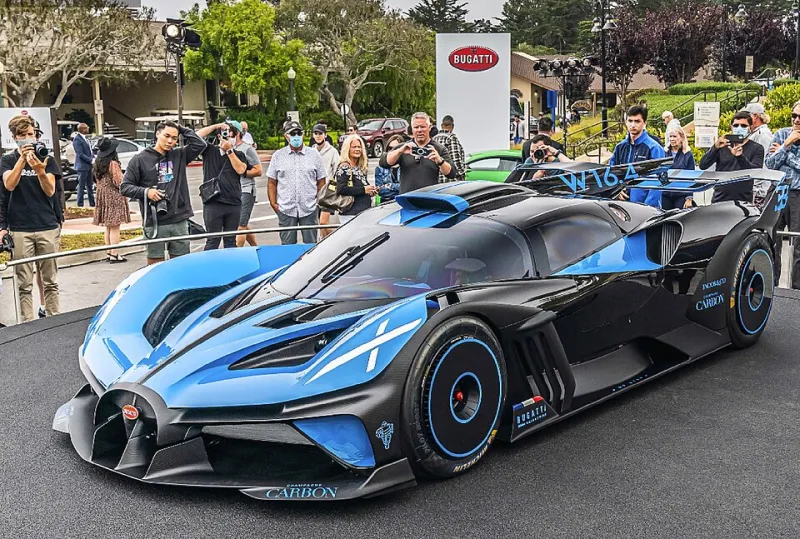
Photo: Ron Frazier, CC BY 2.0, via Wikimedia Commons
There is a particular silence that descends over a well-curated garage late at night. It is not the silence of emptiness. It is the silence of decisions — of the vehicles that remain, and the quiet absence of the ones that did not survive the cut. Every serious collector knows that silence. Most will admit, if pressed, that it is not entirely comfortable.
The fantasy of collecting rare and exceptional automobiles rarely includes this part. The acquisition receives the attention: the discovery, the negotiation, the transport, the reveal. What gets discussed far less often is the machinery of sacrifice that makes each acquisition possible. Finding your singular vehicle — the one that has occupied a specific corner of your imagination for years — almost always means letting go of something else. Sometimes it means letting go of several things at once.
The Space Problem Nobody Advertises
Physical space is the most obvious constraint, and yet it remains the one that surprises collectors most stubbornly. A private collector based in the Pacific Northwest, who maintains a rotating inventory of between eight and twelve vehicles at any given time, described the calculation plainly: "Every time I bring something in, I have to ask myself what it is displacing — not just physically, but financially and emotionally. A garage slot isn't just square footage. It's insurance, maintenance attention, registration, and a portion of my focus that can't go somewhere else."
That last element — focus — is the one most frequently underestimated. Exceptional vehicles do not maintain themselves. A rare American muscle car from the early 1970s, a coachbuilt European touring car, a limited-production sports car from a manufacturer that no longer exists: each demands a different kind of stewardship. Multiply that across a collection of meaningful size, and the cognitive load becomes substantial. Collectors who have managed large inventories for decades speak consistently about the moment they realized that more vehicles did not mean more enjoyment. It often meant less.
The Financial Cascade
Beyond space and attention lies the more complex arithmetic of capital. Even collectors with significant resources encounter the reality that liquidity and net worth are not the same thing. A substantial portion of a collector's wealth may be tied up in the vehicles themselves, making each new acquisition a genuine financial decision rather than a casual indulgence.
"People assume that if you can afford to collect at a serious level, you simply write a check and move on," said one East Coast collector who has been acquiring and occasionally selling vehicles for more than three decades. "But the vehicles I care most about tend to be illiquid assets. When something truly extraordinary comes available, I often have to engineer the capital to pursue it. That means deciding what else in the collection is ready to find a new home."
This dynamic creates what several collectors describe as a rolling portfolio mentality — one that more closely resembles the logic of investment management than the popular image of a passionate hobbyist. Vehicles are assessed not only for their personal significance but for their market position. Some are held indefinitely. Others serve as strategic assets that can be converted when the right opportunity arrives.
The Emotional Calculus
The financial framework, however rational it may appear, exists alongside a far messier emotional reality. Collections are rarely assembled through pure logic. They accumulate through decades of desire, happenstance, and the kind of irrational attachment that no spreadsheet can fully capture.
Letting go of a vehicle — even one that has been categorized, however loosely, as a candidate for eventual sale — carries genuine weight. Collectors describe the experience in terms that would be familiar to anyone who has parted with something that held personal meaning. There is relief, sometimes. There is occasionally regret. And there is almost always the peculiar sensation of watching something irreplaceable pass into someone else's hands, knowing that the transaction was necessary but feeling its finality nonetheless.
A collector based in Texas, who specializes in pre-war American automobiles, described a sale he completed several years ago as "the right decision that still felt wrong for about six months afterward." The vehicle in question had been in his possession for over a decade. Its departure funded the acquisition of something rarer and, by his own assessment, more significant. He does not second-guess the outcome. But he does not pretend the process was painless.
The Art of Letting Go Strategically
Experienced collectors have developed frameworks — some formal, some intuitive — for navigating these decisions. The most common involves a tiered classification of the collection itself: vehicles that are permanent, vehicles that are held pending the right circumstances, and vehicles that are actively positioned for eventual transition.
This approach requires a degree of emotional detachment that does not come naturally to most enthusiasts. It demands the ability to look at a vehicle that has provided genuine pleasure and see it simultaneously as a means to an end — a stepping stone toward something that has not yet been acquired. Not every collector can sustain that perspective without experiencing some erosion of the joy that motivated collecting in the first place.
Those who manage it successfully tend to share a particular orientation: they are, at their core, more invested in the quality of the collection than in any individual vehicle within it. The goal is not to accumulate. The goal is to curate — to arrive, over time, at an inventory that represents the clearest possible expression of a specific sensibility. Every departure, when it is done well, moves the collection closer to that ideal.
What Only One Looks Like
There is, for many serious collectors, a point of arrival — a collection that has been refined through years of acquisition and divestiture into something that feels genuinely complete. Not finished, necessarily. But coherent. Each vehicle justifies its place not merely through its individual merit but through its relationship to everything else in the garage.
Reaching that point requires accepting the paradox at the center of serious collecting: that having everything you want sometimes means having fewer things than you once owned. The vehicles that did not make the final cut were not failures. They were, in many cases, the price of admission to something better.
The collector's curse, it turns out, is not really a curse at all. It is a discipline — one that asks more of its practitioners than most hobbies do, and rewards them accordingly.