Stranded at the Pump: Evaluating Long-Term Parts Viability Before You Fall in Love With a Rare Engine
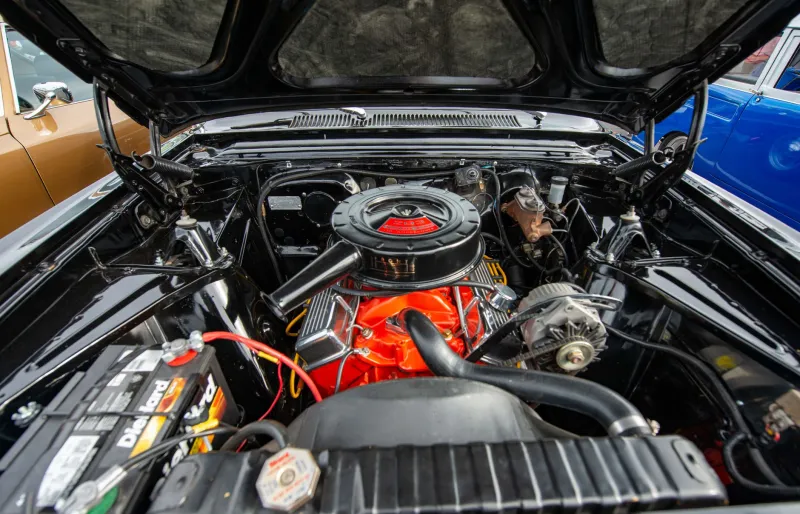
There is a particular kind of heartbreak reserved for the collector who discovers, months or years after a purchase, that the engine powering their prized vehicle exists in a kind of industrial orphanhood. No factory support. No reliable third-party suppliers. A handful of specialists spread across the country who answer the phone when they feel like it. The car is magnificent. The powerplant is a masterpiece of engineering. And it is slowly, quietly, becoming impossible to keep alive.
For buyers operating in the rare and specialty vehicle market, engine parts viability is not a footnote in the ownership conversation — it is one of the central chapters. Understanding how to evaluate that viability before signing a purchase agreement is among the most practical skills a serious collector can develop.
Why Some Engines Outlive Their Era and Others Do Not
The economics of aftermarket parts support are unforgiving in their simplicity. Suppliers produce components when enough demand exists to justify tooling, inventory, and distribution costs. When a powerplant was installed in tens of thousands of vehicles, that demand sustains itself for decades. When an engine appeared in a limited-production model, a single market segment, or a brief production window, the demand curve flattens quickly — and suppliers follow.
This is not a commentary on engineering quality. Some of the most technically sophisticated engines ever fitted to American or imported vehicles have the most fragile supply chains, precisely because their exclusivity limited the installed base. A V8 that powered a mainstream pickup truck for fifteen years will have parts available long after a hand-assembled unit from a boutique manufacturer has become an exercise in improvisation.
The collector who understands this distinction enters negotiations with considerably more clarity than one who evaluates only the engine's performance credentials.
The Manufacturer Support Question
The first line of inquiry for any prospective buyer should be the status of factory or original-manufacturer support. This is not always straightforward. Some manufacturers have ceased operations entirely. Others have been absorbed into larger corporate structures where legacy parts programs survive in name only. A few maintain genuine, well-funded heritage divisions that continue producing components for vehicles built generations ago.
For vehicles from defunct manufacturers — a category that encompasses a surprising range of specialty and limited-production cars — the question shifts to whether any successor entity has assumed parts responsibilities. Licensing agreements, enthusiast-run reproduction programs, and third-party castings can sometimes fill gaps left by a manufacturer's exit. The quality and reliability of these alternatives varies enormously, and verifying them requires direct contact with marque specialists and owner communities, not a cursory online search.
For vehicles from active manufacturers, the picture is more nuanced. Corporate parts programs typically operate on defined timelines. Understanding where a given model falls within that timeline — and whether the manufacturer has made any public commitments regarding extended support — provides meaningful guidance about what ownership will look like in five or ten years.
Reading the Third-Party Ecosystem
Beyond factory channels, the third-party aftermarket is where most long-term engine serviceability actually lives. Evaluating this ecosystem requires a structured approach.
Begin with the number of active suppliers currently producing or stocking components for the engine in question. A single specialist carrying critical parts represents a single point of failure. Two or three independent suppliers indicate a market large enough to sustain competition — and competition generally improves both availability and pricing. A robust ecosystem of five or more active participants suggests a powerplant with genuine long-term support infrastructure.
Next, examine what categories of parts are covered. Gaskets, seals, and wear items should be available from multiple sources. Internal components — bearings, pistons, connecting rods — are more telling. If rotating assembly components exist only as new-old-stock from a single supplier, the long-term calculus becomes considerably more precarious. Machined components that can be fabricated to specification by a competent machine shop represent a different risk profile than proprietary electronics or hydraulic units that cannot be reverse-engineered without significant investment.
Electronic engine management systems deserve particular scrutiny. Modern specialty vehicles frequently employ proprietary control units that are neither repairable nor replaceable through conventional channels. When the original unit fails — and all electronics eventually fail — the owner's options may be limited to a dwindling supply of used units, an expensive reprogramming exercise, or a conversion that compromises originality. This is not a hypothetical concern. It is an active problem for owners of several well-regarded specialty vehicles from the 1990s and early 2000s.
The Community Factor
Owner and enthusiast communities are, in practice, one of the most reliable indicators of long-term engine support. A vibrant, technically engaged community generates knowledge documentation, collective sourcing efforts, and informal supplier relationships that can sustain a powerplant long after official channels have gone silent.
Before committing to a vehicle with an unusual or specialized engine, it is worth spending meaningful time in the relevant forums, registries, and club organizations. The tenor of those conversations is instructive. Communities that actively discuss parts sourcing, share machining specifications, and maintain contact with specialist suppliers are communities that have thought seriously about long-term ownership. Communities that primarily discuss the vehicles' aesthetics and provenance — while avoiding technical questions — may be signaling that the engineering conversation is one nobody wants to have.
Quantifying the Risk Before It Quantifies You
A practical framework for evaluating engine parts viability might assess the following factors in sequence: active manufacturer or successor support, the number and independence of third-party suppliers, the availability of internal and rotating assembly components, the repairability of electronic systems, and the technical engagement of the owner community. No single factor is determinative, but the aggregate picture that emerges from honest inquiry rarely lies.
For buyers operating at the premium end of the rare vehicle market, this analysis is not pessimism — it is stewardship. A vehicle that cannot be maintained is a vehicle that will eventually be parted out, stored indefinitely, or sold at a discount that reflects the reality its previous owner preferred not to confront. Understanding the engine's future before the purchase is complete is simply the most efficient way to avoid inheriting someone else's unresolved problem.
The rarest vehicles deserve owners who have asked the hardest questions first. The engine that makes a car extraordinary should not also be the reason it eventually becomes impossible. Knowing the difference, before the transaction closes, is what separates a considered acquisition from an expensive lesson.