When the Internet Finds It First: The Hidden Cost of Viral Visibility in the Rare Car Market

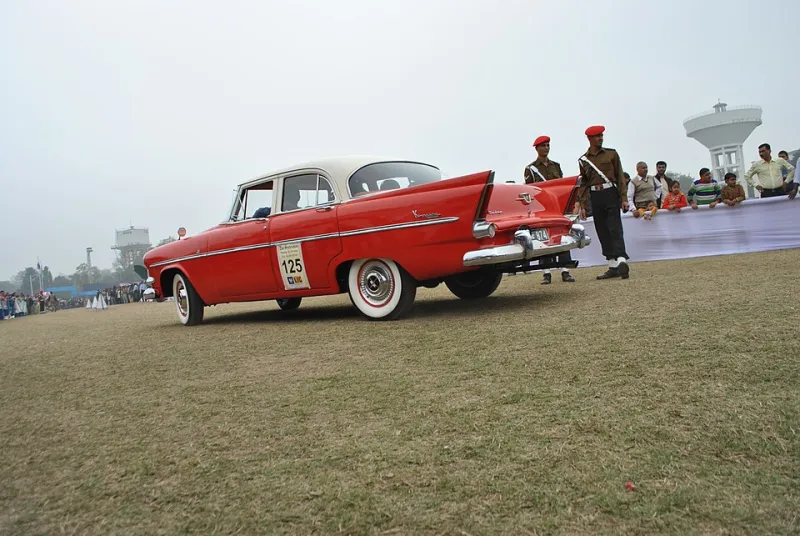
Photo by Photo by Clinton Naik on Unsplash on Unsplash
There was a time, not long ago, when finding a rare automobile required a particular kind of patience. It meant cultivating relationships with regional dealers, placing classified ads in hobbyist publications, and driving hours to inspect vehicles that turned out to be nothing close to what was described over the phone. The search itself was a filter—one that rewarded commitment and penalized casual interest.
That filter is gone.
Today, a single YouTube video documenting a barn-find restoration can reach three million viewers in a week. A forum post detailing the specifications of an obscure limited-production model can be indexed by search engines within hours, permanently altering how that vehicle is perceived—and priced—by a global audience. The internet did not simply make rare cars easier to find. It made them easier for everyone to find, simultaneously, all at once. And for the serious collector, that distinction carries consequences that are difficult to overstate.
The Discovery Problem
Consider the mechanics of what happens when an overlooked vehicle enters the public consciousness through digital channels. Prior to any viral moment, that vehicle exists in a quiet ecosystem. Its value is understood primarily by a small community of enthusiasts who have spent years accumulating specialized knowledge. Prices reflect that insularity. Supply and demand operate within a narrow, relatively stable band.
Then comes the exposure. Perhaps a well-followed restoration channel documents a build. Perhaps a popular automotive journalist publishes a retrospective. Perhaps a celebrity posts a photograph from their garage. Within days, search volume for that vehicle spikes. Auction platforms see a surge in watch-list additions. Private sellers, monitoring the same internet their buyers are watching, quietly revise their asking prices upward.
The vehicle has not changed. Its rarity has not changed. What has changed is the size of the audience competing for it—and that audience now includes buyers who knew nothing about the car seventy-two hours ago but are suddenly convinced they must have one.
Democratization and Its Discontents
It would be intellectually dishonest to dismiss the benefits of digital transparency entirely. Online forums have preserved institutional knowledge that might otherwise have been lost when key figures in niche communities aged out of active participation. YouTube channels have documented restoration techniques that no printed manual ever captured. Social media has connected collectors across geographic boundaries that once made collaboration impossible.
But democratization of knowledge and democratization of access are not the same thing. When information about a rare vehicle becomes universally available, the knowledge advantage that once belonged to dedicated enthusiasts is neutralized. The collector who spent a decade learning the production history of a particular limited-edition American muscle variant no longer holds a meaningful edge over someone who spent forty-five minutes reading a Reddit thread. The expertise gap closes, but the supply of vehicles does not expand to accommodate the newly informed demand.
What results is a market in which prices rise not because the vehicles have become more valuable in any objective sense, but because the pool of buyers has grown faster than any rational analysis of the vehicle's merits would predict.
The Influencer Effect on Valuation
Influencer culture has introduced a particularly disruptive variable into this equation. When a prominent automotive personality—whether on YouTube, Instagram, or TikTok—acquires and documents a specific vehicle, they are not merely sharing content. They are, functionally, endorsing an asset class to an audience that often lacks the historical context to evaluate that endorsement critically.
The followers of a popular build channel do not necessarily understand why a particular configuration of a 1970s Japanese import commands a premium over a more common variant. What they understand is that someone they trust found it compelling enough to feature. That association alone is sufficient to drive interest, and interest drives price.
This phenomenon is not unique to automobiles, of course. It operates across virtually every collectibles category. But the rare car market is particularly vulnerable because the supply of genuinely significant vehicles is finite and largely fixed. When demand is artificially inflated by cultural momentum rather than informed appreciation, the resulting prices can disconnect from any defensible foundation—until, inevitably, they correct.
What the Serious Buyer Must Now Navigate
For the collector who approaches vehicle acquisition with genuine intention—who has done the research, understands the provenance considerations, and is prepared to hold for the long term—the viral marketplace creates a specific set of challenges.
First, timing has become more critical than ever. A vehicle that can be acquired quietly, before it attracts broader attention, represents a fundamentally different proposition than the same vehicle purchased at the peak of its cultural moment. Identifying candidates before the internet discovers them requires the kind of deep, sustained engagement with niche communities that no algorithm can replicate.
Second, the due diligence process has become more complicated. When a vehicle achieves viral status, it also attracts imitators. Sellers become more aggressive in representing common examples as exceptional ones. Documentation that might once have been scrutinized only by specialists is now being evaluated—or rather, failing to be evaluated—by buyers whose enthusiasm exceeds their expertise.
Third, and perhaps most consequentially, the emotional landscape of acquisition has shifted. There is a meaningful difference between owning a vehicle because you understand what it is and owning it because you saw it on a screen and wanted to participate in someone else's narrative. The former tends to produce owners who maintain, preserve, and genuinely steward rare automobiles. The latter tends to produce sellers—often within eighteen months, when the novelty fades and the maintenance realities set in.
The Case for Deliberate Obscurity
There is a counterintuitive argument to be made here, one that runs against the instinct of anyone who has spent time in enthusiast communities: the vehicles most worth owning may be precisely those that the internet has not yet found.
This is not a romantic notion. It is a practical one. The rare automobile that exists below the threshold of viral discovery still trades on its actual merits. Its seller is motivated by realistic expectations rather than inflated comparables. Its buyer can approach the transaction with the calm deliberation that significant acquisitions deserve.
Finding such vehicles requires the very qualities that digital convenience has made unfashionable—patience, specialized knowledge, and a willingness to pursue leads through channels that are not indexed by search engines. It requires, in other words, the kind of collector the market rewarded before the internet arrived to level the playing field.
The internet did not ruin the rare car market. But it did permanently alter the conditions under which exceptional vehicles can be found, evaluated, and owned with any degree of exclusivity. Understanding that alteration is not optional for anyone serious about acquisition. It is the beginning of strategy.